Blog Home Page

Showing posts with label Osiris. Show all posts

Thursday, July 17, 2014

Irish Celtic God Cermait is Dionysus-Osiris


High Kings were traditionally installed on the Hill of Tara. The Lia Fáil (pictured) which tradition says shouted the rightful king's name when he placed his foot on it


The Irish Celtic God Cermait (Cearmaid) is the equivalent of the Dionysus-Osiris.  Per wikipedia:

In Irish mythology, Cermait (modern spelling: Cearmaid) of the Tuatha Dé Danann was a son of the Dagda. He was known by the epithet Milbél (honey-mouth. See also Ogma). He was killed by Lugh after he had an affair with Lug's wife. The Dagda cried tears of blood for his son. Cermait's three sons, Mac Cuill, Mac Cecht and Mac Gréine, avenged his death, and went on to become joint High Kings of Ireland.

This would then mean that Lugh is the equivalent of the Greek Prometheus and his story does match Prometheus.  Lugh is also a Celtic Trickster God, just like Prometheus.

Please notice the "Cear" in the Cearmaid name which is part of the word Osiris and Caesir, Czar, and Kaiser.  They sound the same because these bloodlines came from Dionysus-Osiris.

by Rita Jean Moran (www.thelibrarykids.com and www.hiddenhumanstory.com)


Links:

http://en.wikipedia.org/wiki/Cermait

http://en.wikipedia.org/wiki/Lugh

http://en.wikipedia.org/wiki/High_King_of_Ireland

Monday, July 7, 2014

The Sumerian Dumuzi is the Greek Dionysus


The marriage of Inanna and Dumuzid


Dionysus


One of the lovers of Inanna/Ishtar was Dumuzi.  He was killed by several other people as talked about in Sumerian-Babylonian myth entitled, The Dream of Dumuzi.  In it he tells his sister-wife, Geshtinanna about a bad dream he had regarding his murder (sounds like Balder's dream from Nordic mythology).  She does not want to hear it but tells him it is a bad sign.  At the end of the poem, Dumuzi is accosted by several men and murdered. This is the only Sumerian God that is murdered just as Dionysus-Osiris and his other names was the only God who was murdered.  The description of the murder involves being bludgeoned to death as opposed to the Egyptian story of Osiris being locked in a coffin to die and the Nordic story of the mistletoe arrow killing Balder.  But there is only one God that is murdered in all mythologies by a group of men and so I conclude that Dumuzi is the Greek Dionysus.  Here are some passages from the ancient Sumerian-Babylonian myth, The Dream of Dumuzi:


The galla surrounded Dumuzi.
They bound his hands; they bound his neck.
They beat the husband of Inanana.
Dumuzi raised his arms to heaven, to Utu, the God of Justice,
and cried out:

"O Utu, you are my brother-in-law,
I am the husband of your sister.
I am the one who carried food to the holy shrine.
I am the one who brought wedding gifts to Uruk.
I kissed the holy lips.
I danced on the holy knees, the knees of Inanna.

Change my hands into the hands of a gazelle.
Change my feet into the feet of a gazelle.
Let me escape from my demons.
Let me flee to Kubiresh!"


Dumuzi escapes but is found again and beaten to death by the men who attacked him.


The galla climbed the reed fence.
The first galla struck Dumuzi on the cheek with a piercing nail,
The second galla struck Dumuzi on the other check with the shepherd's
crook,
The third galla smashed the bottom of the churn,
The fourth galla threw the drinking cup down from its peg,
The fifth galla shattered the churn,
The sixth galla shattered the cup,
The seventh galla cried:
"Rise, Dumuzi!
Husband of Inanna, son of Situr, brother of Geshtinanna!
Rise from your false sleep!
Your ewes are seized! Your lambs are seized!
Your goats are seized! Your kids are seized!
Take off your holy crown from your head!
Take off your me-garment from your body!
Let your royal sceptre fall to the ground!
Take of your holy sandals from your feet!
Naked, you go with us!"

The galla seized Dumuzi.
They surrounded him.
They bound his hands.  They bound his neck.

The churn was silent.  No milk poured.
The cup was shattered.  Dumuzi was no more.
The sheepfold was given to the winds.


(Inanna Queen of Heaven and Earth Her Stories and Hymns from Sumer by Diane Wolkstein and Samuel Noah Kramer pages 81-84.)


by Rita Jean Moran (www.thelibrarykids.com and www.hiddenhumanstory.com)


Links:

http://en.wikipedia.org/wiki/Dumuzid_the_Shepherd

Sunday, May 4, 2014

Ariadne-Isis Faked her Death?


Theseus fighting the Minotaur by Jean-Etienne Ramey, marble, 1826, Tuileries Gardens, Paris


I have several sources that state that Osiris is Dionysus and that his wife was Ariadne.  But it is said in The Dionysiaca, that Ariadne is killed by turning to stone by the head of Medusa (sounds familiar but that is another story).  Yet, other sources say she killed herself or that she died in childbirth.

There are stories of Dionysus retrieving his wife and mother from Hades in Diodorus Siculus' Library of History.

What really happened?  Well, as an interpreter of these ancient stories, I believe she faked her death because she didn't want to be remembered by the stories of the Minotaur and his strange conception.  I believe her and Dionysus went to Egypt after his Indian War and triumph and their marriage in Naxos and reinvented themselves there as Osiris and Isis.  The story of Ariadne also has variations of her crown's origin.  The constellation of Corona represents her and her crown.  Per Wikipedia and many ancient sources:

In Greek mythology, Corona Borealis was sometimes considered to represent a crown that was given by Dionysus to Ariadne, the daughter of Minos of Crete. When she wore the crown to her wedding, where she married Dionysus, he placed her crown in the heavens to commemorate the wedding.[4]

The story of the Minotaur includes the labyrinth which interestingly enough is similar to the story of the American Hopi legend of their Man in the Maze (but without the same details).  Again, my research indicates that the Kachinas of the Hopi were the visiting Cronides.


The Minotaur in the Labyrinth, engraving of a 16th-century CE gem in the Medici Collection in the Palazzo Strozzi, Florence[17]


I'itoi, the Man in the Maze


Per Wikipedia:

The Pima also refer to I'itoi as Se:he "Elder Brother". The term Iʼithi is a dialectal variant used by the Hia C-eḍ O'odham.
He is most often referred to as the Man in the Maze, a reference to a design appearing on native basketry and petroglyphs which positions him at the entry to a labyrinth. This labyrinth is believed by the Pima to be a floorplan of his house, and by the Tohono O'odham to be a map giving directions to his house.


by Rita Jean Moran (www.thelibrarykids.com and www.hiddenhumanstory.com)


Links:

http://en.wikipedia.org/wiki/Corona_Borealis

http://en.wikipedia.org/wiki/Minotaur

http://en.wikipedia.org/wiki/I'itoi

http://en.wikipedia.org/wiki/Medusa

Thursday, April 24, 2014

Dionysus-Osiris and His Global Mission


Dionysus-Osiris and his army of Satyrs and Maenads went to civilize the world along with his father Zeus and the rest of the House of Cronus, the House of Zeus, the House of Iapetus, and the House of Prometheus.  His main objective was to introduce the cultivation of the grape vine for wine, eventually grains for consumption, and his belief in peaceful ways but willing to fight if attacked. 

His first mission was to subdue the Indians in Asia and then he went on to the rest of the world including Egypt.  It was his wife, Isis-Ariadne, who discovered the usage and cultivation of the grains in the same manner as Demeter had discovered and perfected the cultivation and processing of corn.  Here are some snippets from the ancient Greek writers, Nonnos and Plutarch:


Two satyrs and a maenad. Side A from an Ancient Greek red-figure kylyx-krater from Apulia, 380–370 BC. Louvre, Paris


The children of Dionysus-Osiris and Isis-Ariadne became the "Sacred Heart" royal Pharaonic bloodline and ruled the world with the rest of the descendants from the House of Zeus, but it was the intent of Zeus to have the Pharaonic line be in leadership.


Wednesday, April 23, 2014

Dionysus-Osiris was the Reincarnation of Zagreus

The story of Zagreus is a violent one.  Zagreus was the child of Persephone and Zeus who was killed violently by the Titans.  It was this hidden history that caused the Titanomachy.  After Zagreus was killed and dismembered and cannibalized, only his heart was left on the floor and was recovered by Athena.  Zeus created a concoction with it and drank it, thinking he held the soul of Zagreus in himself waiting to impregnate another and give Zagreus a new body.  Semele was selected and impregnated and Dionysus was born from her and Zeus.  Dionysus is thus called twice-born (and sometimes thrice-born due to an elder Dionysus who was Indian and lived during the time of Cronus) and represented as a baby and a young man because he was killed once as Zagreus and once by Prometheus-Set when he was tricked into a box and sealed up when he was the Pharaoh Osiris.  Here is a snippet of this story from Nonnos' Dionysiaca:


The "Sacred Heart" bloodline was the Pharaonic bloodine created by Dionysus-Osiris and Ariadne-Isis.  This bloodline is illustrated in the sacred heart of Jesus Christ. This story is embedded in the Orphic Mysteries and has been hidden from the masses.  I believe this is one more reason my work is being shunned by the media because it unravels some very ancient secrets and modern day lies.


The "as above and to the heart" hand symbolism often shown with Jesus Christ goes back to Zeus who was the progenitor of this bloodline and many other elite bloodlines.   Watch for an article I will be posting on bloodline origins down the road.


And here is a snippet of what I will be exposing down the road along with who and where the races and elite bloodlines come from:
 
 
"The Jews had tried to corrupt Roman values with their cult of Jupiter Sabazius, so the praetor forced them to go back to their home.” - Valerius Maximus


The above quote is from Valerius Maximus' Memorable Deeds and Sayings One Thousand Tales From Ancient Rome.  Here is a scan of the page from the book:


by Rita Jean Moran (www.thelibrarykids.com and www.hiddenhumanstory.com)


Tuesday, April 22, 2014

Osiris is Dionysus

I have written it in my Hidden Human Story books and explained that all the gods/goddesses from around the world all refer to the ancient family from Crete and Tyre that traveled the world.  For now, I will put a quick scan of one of the books that tells you this so no one can deny this.  This is from the ancient Greek writer Nonnos and his work entitled the Dionysiaca.:


This is just the tip of the iceberg.

"And he showed forth the Euian secrets of Osiris, the wanderer, the Egyptian Dionysos."

Many other texts from the Loeb Library and other ancient writers confirm this as well as give other names for Zeus and Dionysus.  The story I've uncovered that is embedded in ancient mythology is amazing and very controversial.  I have tried to bring this to light by contacting the producers of various TV and Radio shows to discuss my findings but they won't let me on.  I believe I know exactly why they won't let me on and it has to do with exposing some very ancient secrets.


by Rita Jean Moran (www.thelibrarykids.com and www.hiddenhumanstory.com)


Thursday, September 12, 2013

Krishna is Dionysus-Osiris


For those that are familiar with my work, you will know that Dionysus is thrice-born.  Once as the child Zagreus who was killed, once from his mother Semele as Dionysus-Osiris, and once from the thigh of Zeus.  However, my research has found an even older Dionysus who was the son of Ammon and who came before Zagreus (I will discuss this later).  But without a doubt, Krishna is also Dionysus-Osiris and is often represented as a child and young man in the same manner as Dionysus.  He was killed as a young man, too.  Per Wikipedia:


According to Mahabharata, the Kurukshetra war resulted in the death of all 100 sons of Gandhari. On the night before Duryodhana's death, Lord Krishna visited Gandhari to offer his condolences. Gandhari felt that Krishna knowingly did not put an end to the war, and in a fit of rage and sorrow, Gandhari cursed that Krishna, along with everyone else from yadu dynasty, would perish after 36 years. Krishna himself knew and wanted this to happen as he felt that the Yadavas had become very haughty and arrogant(adharmi), so he ended Gandhari's speech by saying "tathastu".[80][81][82]
At a festival, a fight broke out between the Yadavas, who killed each other. His elder brother, Balarama, then gave up his body using Yoga. Krishna retired into the forest and started meditating under a tree. The Mahabharata also narrates the story of a hunter who kills Krishna. The hunter Jara, mistook Krishna's partly visible left foot for that of a deer, and shot an arrow, wounding and killing him mortally. After he realised the mistake, Krishna told Jara, "O Jara, you were Vaali in your previous birth, killed by myself as Rama in Tretayuga. Here you had a chance to even it and since all acts in this world are done as desired by me, you need not worry for this". Krishna's soul then ascended to heaven, while his mortal body was cremated by Arjuna.[83][84][85]


 The Kurukshetra War is believed to date variously from 6000 BCE to 500 BCE,[1] based on the astronomical and literary information from Mahābhārata. The history of the Kurukshetra War is also traced to the Battle of the Ten Kings mentioned in Rigveda.[2]
 
 
Could the Kurukshetra war have been the war of the Titans?  Or could this have been the wars of Dionysus as described in the Dionysiaca?  Could the Battle of the Ten Kings have been the Titanomachy?  I will research this further.  The timing would place this war at about 8000 years ago which is less than my time estimates of about 16,000 to 17,000 years ago.


Sources:


Sunday, January 6, 2013

The Third Temple and the Staff

The Lord's Prayer

Our Father who art in Heaven,
Hallowed be thy name,
Thy kingdom come,
Thy will be done on Earth as it is in Heaven,
Give us this day, our daily bread,
And forgive  us of our trespasses as we forgive those who trespass against us,
And lead us not into temptation,
but deliver us from evil

For yours is the kingdom now and forever.


This was a prayer I learned long ago.  What strikes me are the passages about "give us our daily bread" and "the kingdom" parts.  The idea of giving bread to the human race stems from the tales of Osiris and Isis.

According to Diodorus Siculus I in Books I-II:

Osiris was the first, they record, to make mankind give up cannibalism; for after Isis had discovered the fruit of both wheat and barley which grew wild over the land along with the other plants but was still unknown to man, and Osiris had also devised the cultivation of the fruits, all men were glad to change their food, both because of the pleasing nature of the newly-discovered grains and because it seemed to their advantage to refrain from their butchery of one another.

It is also said that Osiris built a temple to his parents:

Osiris they add, also built a temple to his parents, Zeus and Hera, which was famous both for its size and its costliness in general, and two golden chapels to Zeus, the larger one to him as god of heaven, the smaller one to him as former king and father of the Egyptians, in which role he is called by some Ammon.

After teaching the Egyptians about agriculture, Osiris traveled the world with a great army:

Of Osiris, they say that, being of a beneficient turn of mind, and eager for glory, he gathered together a great army, with the intention of visiting all of the inhabited earth and teaching the race of men how to cultivate the vine and sow wheat and barley; for he supposed that if he made men give up their savagery and adopt a gentle manner of life he would receive immortal honours because of the magnitude of his benefactions.
It is also written in this book that the time of the rule of Osiris and Isis was as follows:

The number of years from Osiris and Isis, they say, to the reign of Alexander, who founded the city which bears his name in Egypt, is over ten thousand, but according to other writers, a little less than twenty-three thousand.   

What I find interesting is the commonality of the bread in the temple as well as the shape of many temples around the world.  The majority of temples are rectangular and there is much talk about rebuilding a third temple in Jerusalem.


Rectangular Polynesian Temple


Rectangular temple of Lono in Oahu


The communal bread or showbread is present in the churches/temples of today, as part of the religious ceremony.  I do not know if Polynesian rectangular temples included ceremonies with bread, but the god Lono was an agricultural god.

The staff is also present among many priesthoods.  Osiris had a crook staff and a flail.  Aaron had a rod and so did Moses.  Shiva and Queztlcoatl and Poseidon all had trident rods.  All pharaohs had staffs and royalty carry scepters.

Aaron's rod refers to any of the staves carried by Moses' brother, Aaron, in the Old Testament of the Bible. The Bible tells how, along with Moses' rod, Aaron's rod was endowed with miraculous power during the Plagues of Egypt that preceded the Exodus. There are two occasions where the Bible tells of the rod's power even when it was not being held by its owner.

It is my belief that modern priestcrafts and religions all stem from the stories of Osiris and Isis and their parents (the father and mother god/goddess).  The timing of Osiris' and Isis' rule in Diodorus Siculus matches the timing in Manetho's writings.  The jews call their god Adonai.  It sounds very similar to Adonis.  If you read through my children's series, The Library Kids, and my adult book, Mythological Unification Theory, you will hopefully begin to see and understand the connections.

A sacred fire is also present in Jewish temples.  The same was found in ancient Native American mounds (see my article on Ka-Do-Ha Indian Village).  It appears to me, that all ancient systems of religion came from the same source but they contain variations in names (see Mythological Unification Theory) and most became corrupt with cannibalism, human and animal sacrifices, and haughty priests who hoarded the knowledge.  The sooner people figure this out, the sooner they can undo their bondage under a veil of lies and begin to understand the true history that occurred on this planet.  It is of no wonder to me, that the content of the writings of ancient Greeks, Romans, Egyptians, Mayans, Aztecs, Celts, Nordics and others is not taught in the schools.


by Rita Jean Moran (www.thelibrarykids.com)


Sources:

http://en.wikipedia.org/wiki/Lord's_Prayer

http://en.wikipedia.org/wiki/Second_Temple

http://en.wikipedia.org/wiki/Egyptian_temple

http://en.wikipedia.org/wiki/Aaron%27s_rod



Monday, December 24, 2012

Did Osiris Have an Electrical Device that Made Electricity?

There are some very interesting pictures from the tombs and artifacts of ancient Egypt.  Of particular interest is the Djed of Ptah.  It is a common Egyptian symbol representing stability.


The symbol was associated with Ptah and later with Osiris.  According to wikipedia, a strange ceremony called "Raising the Djed" was done every year by the priests of Egypt:
 
The djed pillar was an important part of the ceremony called 'raising the djed,' which was a part of the celebrations of Heb Sed, the Egyptian pharaoh's jubilee celebrations. The act of raising the djed has been explained as representing Osiris's triumph over Set.[9] Ceremonies in Memphis are described where the pharaoh, with the help of the priests, raised a wooden djed column using ropes. The ceremony took place during the period when fields were sown and the year's agricultural season would begin corresponding to the month of Choiak, the fourth month of the inundation season called akhet. This ceremony was a part of one of the more popular holidays and celebrations of the time, a larger festival dedicated to Osiris conducted from the 13th to 30th day of the Choiak month. Celebrated as it was at that time of the year when the soil and climate were most suitable for agriculture, the festival and its ceremonies can be seen as an appeal to Osiris, who was the God of vegetation, to favor the growth of the seeds sown, paralleling his own resurrection and renewal after his murder by Seth.

What is interesting to me are some artifacts that have the Djed attached to a light bulb looking object.  See for yourself:


Perhaps there is a hidden past that has been covered up on this planet.  The artifacts that suggest it, usually disappear from public view after attention is brought to them.  The Baghdad battery may also support the idea that the ancients used electricity to light their residences and to do electroplating.


by Rita Jean Moran (www.thelibrarykids.com)


Sources:

http://en.wikipedia.org/wiki/Ptah

http://en.wikipedia.org/wiki/Djed

http://en.wikipedia.org/wiki/Dendera_Temple_complex

http://en.wikipedia.org/wiki/Baghdad_Battery

Monday, November 12, 2012

Baal and Osiris?

I've read some literature regarding the Baal-Mot rituals of ancient Mesopotamia.  Mot kills Baal during the dry times of the year and Baal is reborn when the growing season comes back.  Could Baal have been another name for Osiris and Mot for Set?

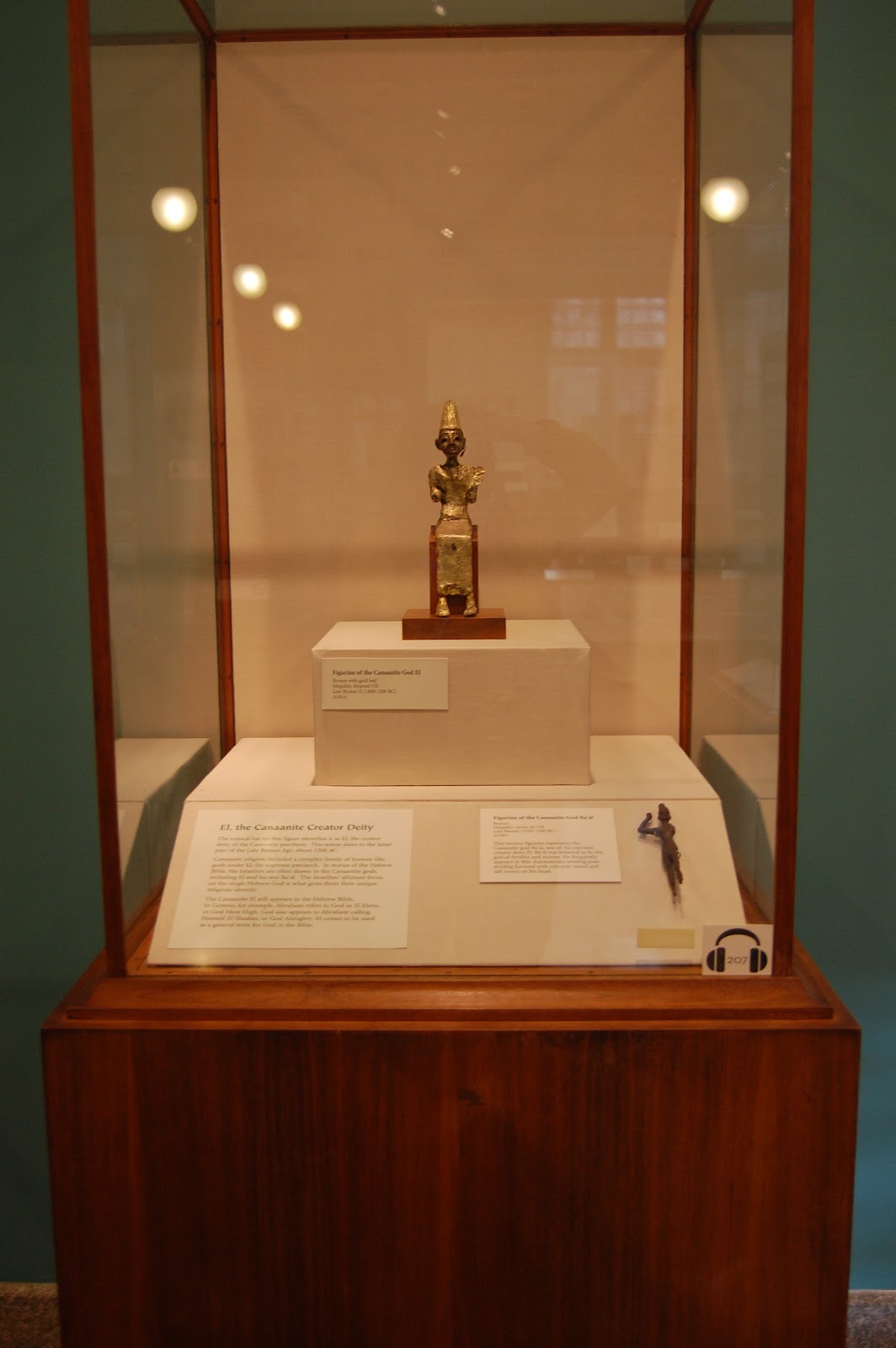
Another clue from the Chicago Oriental Institute is the Baal statues from ancient Mesopotamia.  Compare the headgear of Baal to that of Osiris. It is the same except feathers were added to Osiris (the feathered serpent?).


Statues of Baal from ancient Mesopotamia.


Osiris Statue


I have coined a term called M.U.T. (copyright Rita Jean Moran) which stands for Mythological Unification Theory (copyright Rita Jean Moran).  I am writing about this now; however, I touch on this subject throughout The Library Kids series that all ancient mythologies from around the world are about the same story and that story was that of Osiris, Isis, and Set as well as the gods/goddesses who came before them.  This story was tweaked to coincide with the seasons of the planet and the rituals associated with these mythologies were used to remember the ancient ones as well as to remember the seasons of the planet.  Each culture had/has their own names for these gods/goddesses of old, but they are all the same with slight changes to the story as well as possible exchanges of female goddessess for male gods and vice-versa.

The priests/priestesses of old were the most intelligent people of the tribe who were entrusted with these stories and rituals in order to maintain a planting season that would sustain their people.  Unforutnately with power came corruption.  Some where along the way, cannabalism and human sacrifice were introduced into these rituals when it was not meant to be a part of them.  The story of Isis/Osiris is that they went around the world to teach humans civilization after a great war had sunk the human race into the dark despair of cannabalism and hunger and chaos.  It would not make logical sense that these stories and rituals would include these abominations when Osiris/Isis had worked so hard to eliminate bad ways and introduce farming and knowledge to the world.

I will be looking at my theory of M.U.T. in the next couple of books that I am writing and I will correlate the ancient past to the modern day.  The language of symbols contains much of the ancient past as well as the knowledge of science, math, biology, astronomy, and medicine.  The myths and rituals include the knowledge of planetary cycles and time itself.  It will take time,but I hope to prove out the time line of the past and identify the possible individuals involved in an ancient war that included nuclear and laser weaponry on this planet around 50,000 years ago as well as the re-building of civilization itself.  Stay tuned as the saying goes.


by Rita Jean Moran (www.thelibrarykids.com)

Thursday, July 12, 2012

Destroying Ancient Artifacts, Osiris, King Menes


I just read an article about a group of men who want to destroy the ancient ruins in Egypt because they consider them pagan.  Unfortunately, many artifacts have already been destroyed (the Buddha statues, the Alexandrian Library, the Mayan Codices, and much more) because men want to rewrite history and be in charge of other people.  There is still much to learn from the past.  To not know your past is a sure way to repeat it.  To allow others to rewrite and hide the past is a sure way to be their "slave."

It is said that Osiris was murdered by his brother Set.  His body was dismembered and it is said that his head is buried in Abydos.  Perhaps this is not a myth, but rather a true piece of history.  After doing a lot of research, I found an interesting story about the first king/pharaoh of Egypt who went to war to create Egypt.  His name was King Menes.  Some believe he is also named Narmer and possibly King Scorpion.  The Turin and Abydos king lists site him as the first pharaoh of a united Egypt and the founder of the first Dynasty of Egypt.  The capital of Egypt was Memphis (near Cairo, today).

The Narmer palette shows a view of his conquests. 


This palette is dated to around 3100 B.C., that is about 5100 years ago.  King Narmer was married to Queen Neithhotep and had one son name Hor-Aha.  Narmer was killed by a Hippopotumus.  His son was also menaced by a Hippopotumus.  The Hippopotumus was a symbol of Set so is this recorded piece of history reflecting the real Osiris?  Hor-Aha had 4 sons:  Djer, Rhejet (Rhjt), Heti (Htj) and Saiset (S3jst).  The Horus of legend had 4 sons who became the symbols on the 4 canopic jars used for burial.


If this was the historical Osiris, then it is very important to preserve the history of the world whether your religion agrees with it or not.  It is significant because Osiris was a demi-god giant who was around during the time of his father, Geb, and this gives a very important time-line to the past. 


It is said that Osiris or King Narmer may have been the biblical Nimrod.  He appears to also be the legendary Dumuzi, Bacchus, Dionysis, Queztlcoatl, Kulkukan, Viracocha, Red Horn, Lono, Balder, Vritra, and many other names.  These are global legends about the same person who appears to have part of his body burried in Egypt.  It was said that Osiris civilized the world.  He created Egypt, travelled around the world and taught humans the art of agriculture and farming (humans were said to have devolved into cannibalism at this time) and many other "mysteries."


We need to study the past so that we know who we are, not destroy the past so someone can play world tyrant.  Just think of all the information that went up in flames when the Library of Alexandria was burnt to fuel bath houses.  I also personally believe there is a another female sphinx burried under the sand.  I believe the one you see represents Horus or Hor-Aha and the one burried represents his mother, Isis or Queen Neithhotep.  The dream stele of Thutmose IV not only shows two sphinxs back to back, but it also shows an underground chamber below the sphinx.  Can you imagine what is in there?  I can and I wrote about it my 6th book, The Library Kids The Pharaoh's Clue.  Here is a picture of a reproduction of the dream stele that sits between the paws of the Great Sphinx:


http://commons.wikimedia.org/wiki/File:ReproductionOfDreamSteleOfThutmoseIV_RosicrucianEgyptianMuseum.png


By Rita Jean Moran (www.thelibrarykids.com)


Sources:

http://en.wikipedia.org/wiki/Menes

http://en.wikipedia.org/wiki/Hor-Aha

http://en.wikipedia.org/wiki/Narmer

http://en.wikipedia.org/wiki/Narmer_Palette

http://en.wikipedia.org/wiki/File:NarmerPalette_ROM-gamma.jpg

http://en.wikipedia.org/wiki/Indra

http://www.washingtontimes.com/news/2012/jul/10/editorial-islamist-pyramid-scheme/

http://en.wikipedia.org/wiki/Sphinx

http://en.wikipedia.org/wiki/Great_Sphinx_of_Giza

http://en.wikipedia.org/wiki/Thutmose_IV

http://commons.wikimedia.org/wiki/File:ReproductionOfDreamSteleOfThutmoseIV_RosicrucianEgyptianMuseum.png

http://commons.wikimedia.org/wiki/Category:Dream_Stele_of_Thutmosis_IV